
What Happens After a Spiritual Awakening?
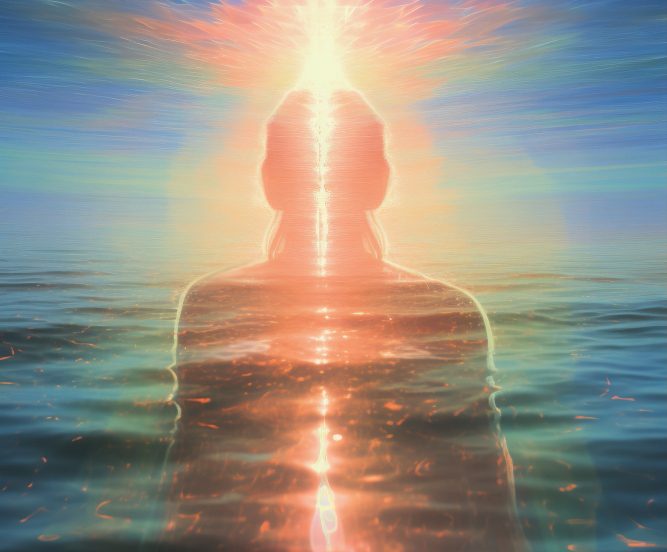
You’ve had the experience. Maybe it came on slowly — a quiet unravelling of everything you thought was true. Or perhaps it arrived all at once, like a lightning bolt that split your life cleanly into before and after. Either way, you’ve touched something vast and unmistakably real, and now you’re standing in unfamiliar territory wondering: what happens after?
This is the question that rarely gets answered honestly. There’s plenty written about the bliss of awakening — the dissolving of ego, the floods of love, the sense of finally coming home. But what about the morning after? What about the weeks, months, and sometimes years that follow, when you’re trying to figure out how to live inside this new understanding while the world around you carries on as though nothing has changed?
If you’re in that space right now, please know this: what you’re experiencing is not a sign that something went wrong. It’s a sign that something is very much in motion. Let’s talk about what that actually looks like.
The Integration Phase: Beautiful and Brutal in Equal Measure
What happens after a spiritual awakening, for most people, is a period of integration. This is the work of bringing what you’ve glimpsed in those heightened moments into the ordinary fabric of your daily life. And it’s genuinely hard work.
Think of it this way: awakening cracks open a window. Integration is learning to live in the house with all that new light flooding in. Your eyes need time to adjust. Your whole system — emotional, psychological, relational — needs time to reorganise itself around what you now know to be true.
Many people are surprised to find that what happens after a spiritual awakening isn’t a permanent state of peace. In fact, some people feel more destabilised after their awakening than before it. Old coping mechanisms no longer work. Relationships that were built on a version of you that no longer exists begin to feel strained. Career paths that once seemed meaningful can suddenly feel hollow. This isn’t a failure of your awakening. This is your awakening doing exactly what it’s meant to do.
The Dismantling of the Old Self
One of the most disorienting things that happens after a spiritual awakening is the gradual — or sometimes very rapid — dismantling of the identity you’ve spent a lifetime constructing. Spiritual traditions across the world speak of this process. In Sufism it’s called fana, the annihilation of the false self. In Buddhism, it relates to the seeing-through of the constructed self. In Christian mysticism, it’s described as the dark night of the soul.
Whatever language we use, the experience is similar: the things you used to use to define yourself — your roles, your achievements, your carefully tended beliefs about who you are and what you deserve — start to lose their grip. And this can feel like loss. It can feel like grief. It can even feel, for a time, like depression.
If you’re in this place, please be gentle with yourself. You are not falling apart. You are falling open. There is a profound difference, even when the two feel identical from the inside.
Relationships Shift — Sometimes Dramatically
One of the most tangible things that happens after a spiritual awakening is a shift in your relationships. Some connections will deepen in ways you never thought possible — you’ll find yourself suddenly capable of a quality of presence and genuine love that transforms your closest bonds. But other relationships may fade, and this can be genuinely painful.
It’s not that you become unkind or superior. It’s more that you become increasingly unable to engage in certain ways of relating that once felt normal — the small dishonestries, the mutual avoidances, the unspoken agreements to never go too deep. You start to hunger for authenticity in a way that not everyone in your life will be ready to meet.
This is worth sitting with compassionately. It doesn’t mean you abandon everyone who isn’t on a spiritual path. Some of the most awake people I’ve ever encountered had no interest whatsoever in spiritual language. Presence, kindness, and genuine connection can be found anywhere. What you’re releasing isn’t people — it’s patterns of relating that no longer serve the truth of who you’re becoming.
The Spiritual Ego: A Subtle and Sneaky Guest
Here is something that doesn’t get talked about enough: what happens after a spiritual awakening sometimes includes the emergence of what teachers call the spiritual ego. This is the part of us that takes the awakening experience and quietly tries to make it into an identity — something to be proud of, to differentiate ourselves from others with, to make us feel special or chosen.
You might notice it in subtle ways. A quiet sense of being more evolved than people who aren’t awake. An impatience with those who are still caught in patterns you feel you’ve transcended. A tendency to spiritually bypass difficult emotions by retreating into elevated concepts rather than actually feeling what’s there.
None of this makes you a bad person. It makes you a human being. The spiritual ego is simply the old survival mechanism trying to adapt to new circumstances. The antidote is not self-judgement but awareness — noticing when it arises with a kind of gentle, even amused recognition. Ah, there it is again.
The Body Asks to Be Included
Something that surprises many people about what happens after a spiritual awakening is how physical the process can be. There’s a common misconception that spiritual growth is something that happens in the upper registers — in the mind, in transcendent states, in meditation. But genuine integration always moves downward, into the body.
Unprocessed emotions that have been stored in the body for years — sometimes decades — can begin to surface. You might find yourself inexplicably tearful, or feel waves of energy moving through you. Some people experience changes in sleep, appetite, or sexual energy. Physical symptoms during times of deep spiritual transition are more common than we tend to acknowledge.
The invitation here is to bring your awakening all the way into the body. This means moving, resting, eating well, spending time in nature. It means allowing the body to be a partner in this process rather than a vehicle you’re trying to transcend. Somatic practices — yoga, breathwork, dancing, walking barefoot on the earth — can be profound allies in the integration process.

A New Relationship With Meaning
One of the quieter gifts of what happens after a spiritual awakening is a fundamental reorientation toward meaning. Things that used to feel important — status, approval, the accumulation of more — lose their urgency. In their place, often quite gradually, a different set of values begins to emerge. Presence over productivity. Depth over surface. Service over self-promotion.
This can create a real practical challenge. Many people find themselves at odds with careers, lifestyles, or ambitions they spent years working toward. The question of how to live in alignment with what you now know becomes central — and it doesn’t always come with easy answers.
What I’d offer here is patience. You don’t need to blow up your life overnight. True integration is rarely dramatic. It’s more often a series of small, honest choices — saying yes to what resonates, gently releasing what no longer does, and trusting that clarity will come as you stay faithful to the process.
Navigating the Dark Night of the Soul
For some people, what happens after a spiritual awakening includes passing through what the 16th-century mystic St. John of the Cross so poignantly named the dark night of the soul. This is a period of profound spiritual aridity — where the light that was so vivid during the awakening seems to have withdrawn entirely, leaving behind what feels like emptiness, meaninglessness, or a kind of spiritual loneliness that is unlike anything ordinary depression brings.
If you’re in this place, the most important thing I can tell you is: this is not abandonment. It is deepening. The dark night, as those who have passed through it consistently report, is not a regression but an initiation. It is where the last traces of the seeking self are refined — where the spirituality that was perhaps still about getting something (peace, enlightenment, relief from suffering) is purified into something more unconditional.
Please also know that there is no shame in seeking support during this time. Spiritual direction, therapy with a practitioner who understands mystical experience, or simply the companionship of those who have walked similar paths — these are not signs of weakness. They are signs of wisdom.
The Gifts That Quietly Emerge
I want to make sure I also speak about the gifts — because what happens after a spiritual awakening, even through all its challenges, carries within it some of the most extraordinary possibilities available to a human life.
There is a quality of presence that begins to develop — a capacity to be genuinely here, in this moment, in a way that transforms ordinary experiences into something luminous. A cup of tea. A conversation. The light through a window. These things begin to carry a weight of aliveness that they didn’t before.
Compassion deepens. Not the effortful, morally-motivated compassion of someone trying to be a good person, but something more natural — a felt sense of the interconnectedness of all life that makes kindness less a choice than a natural expression of how things are.
And there is, in time, a quality of peace that is not dependent on circumstances. Not the absence of difficulty, but something underneath difficulty — a ground of okayness that remains even when life is hard. This is perhaps the deepest gift: not that everything becomes pleasant, but that you discover something in yourself that is not destabilised by the unpleasant.
You Are Not Alone in This
One of the loneliest aspects of what happens after a spiritual awakening can be the sense that nobody around you understands what you’re going through. You may feel reluctant to talk about your experience, worried about sounding strange, or simply unable to find the words to describe something that genuinely transcends ordinary language.
Please know that there is a growing community of people navigating exactly this terrain. There are teachers, communities, and traditions that have been walking alongside awakening individuals for centuries. There is literature — from the ancient mystics to contemporary writers — that can make you feel profoundly less alone.
And there is this: the fact that you are asking what happens after — the fact that you are taking this seriously, approaching it with sincerity and a genuine desire to live what you’ve glimpsed — already places you in good company. The path is real. You are on it. And it goes somewhere beautiful.
Living the Awakening, Every Ordinary Day
Ultimately, what happens after a spiritual awakening is life. Ordinary, irreducible, sometimes difficult, often beautiful life. The invitation is not to spend the rest of your days chasing the heights of that first opening, or mourning the sense that the peak experience has faded. The invitation is something far more sustainable and, in many ways, more profound.
It is to bring what you know into how you wash the dishes. Into how you listen to a friend. Into how you meet your own fear and frustration with a little more space and a little less war. This is the long, slow, deeply worthwhile work of embodied awakening — and it is available to you right now, in this moment, exactly as you are.
The awakening was not the destination. It was the beginning. And beginnings, as any gardener will tell you, require patience, tending, and an abiding trust that what has been planted will, in its own time, come into flower.
We may earn a commission for purchases made using our links. Please see our disclosure to learn more.