
The Dark Night of the Soul Explained Simply
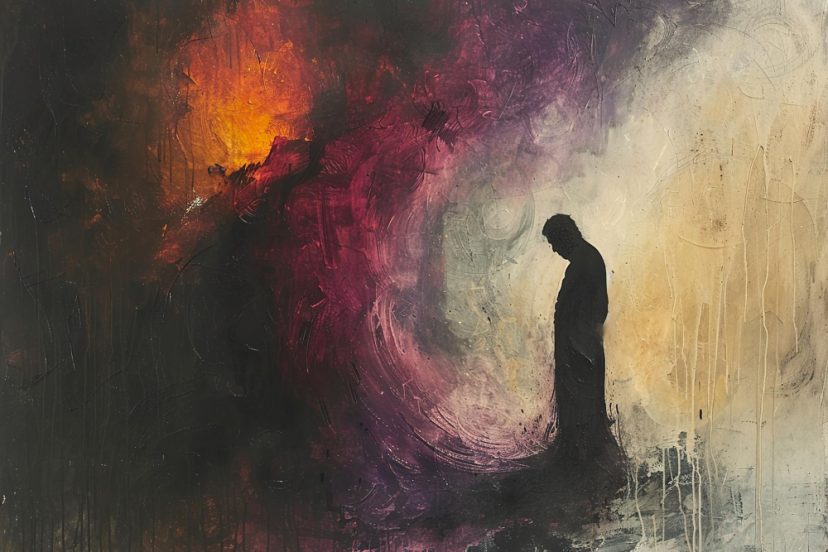
There are moments in life that don’t just knock you off your feet — they take the floor away entirely. You wake up one morning, or perhaps after months of quiet unravelling, and realise that everything you thought you knew about yourself, your world, and your place in it feels hollow. The things that once brought you comfort no longer do. The spiritual practices, the relationships, the beliefs — they feel distant, like trying to remember a dream that fades the more you reach for it.
If this sounds familiar, you may be living through what mystics and spiritual teachers have long called the dark night of the soul.
This is not a breakdown. It is not depression (though it can look similar). It is not a sign that you’ve done something wrong or that you are spiritually failing. In fact, if you can sit with what I’m about to share, you may come to see the dark night as one of the most profound gifts a human soul can receive — even if it doesn’t feel remotely like a gift right now.
What Is the Dark Night of the Soul?
The phrase comes from a 16th-century Spanish mystic and poet named St. John of the Cross. He wrote a poem — Noche Oscura del Alma — describing the soul’s journey through spiritual desolation toward a deeper, more authentic union with the divine. It was raw, honest, and deeply personal. For centuries, it was read primarily within religious and contemplative circles. But today, the concept has moved beyond theology and into the broader landscape of human transformation.
The dark night is, at its core, a dismantling. It is a period — sometimes weeks, sometimes years — in which the ego’s structures begin to dissolve. The identities you’ve built, the beliefs that gave you certainty, the emotional armour you didn’t even know you were wearing — all of it starts to fall away. And that falling away can feel absolutely terrifying.
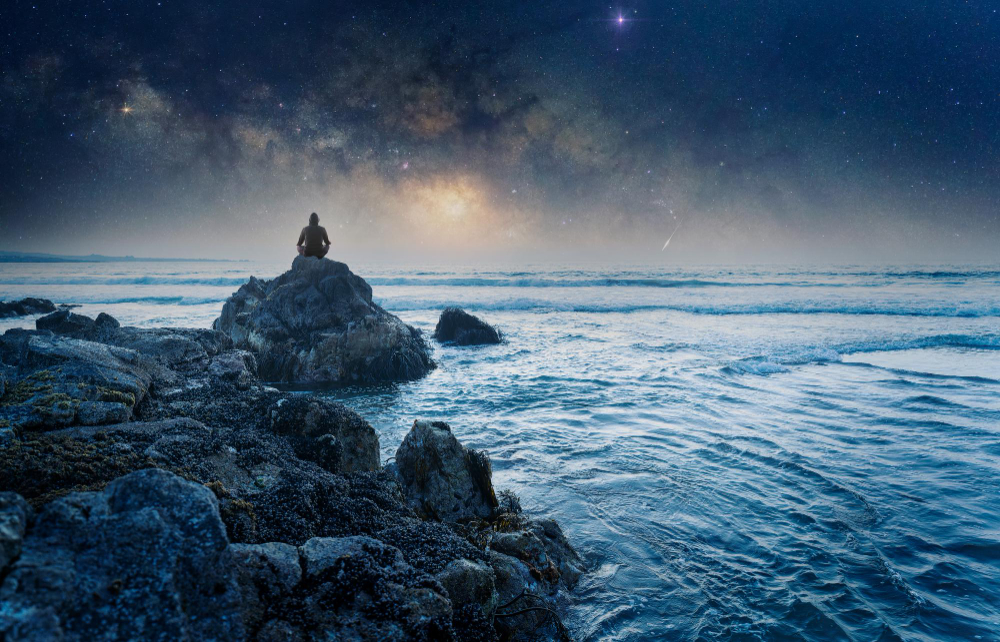
It is sometimes described as a spiritual crisis. But a more accurate framing might be this: it is a spiritual crossing. You are moving from one version of yourself to another, and in between those two versions there is a vast and often very dark stretch of open water.
How Does the Dark Night Begin?
There is no single doorway into the dark night. For some people, it arrives through loss — the death of someone deeply loved, the end of a marriage, a diagnosis, a sudden collapse of identity or purpose. For others, it creeps in quietly. Life looks fine on the outside, but inside there is a growing sense of emptiness, a feeling that the life you are living no longer fits who you are becoming.
Sometimes it arrives because of spiritual growth. This is the part that surprises people most. You may have been meditating for years, doing inner work, attending retreats, reading deeply — and then, as a direct result of that opening, the dark night descends. The more you clear away, the more clearly you see what is still unresolved. The light you’ve let in also illuminates the shadows.
It can feel like abandonment — as though something sacred has turned its back on you. Prayers go unanswered, or feel pointless. Spiritual experiences that once came easily go silent. You reach inward and find… nothing. Or worse, a darkness that seems to have no bottom.
This is the heart of the dark night: the sense of divine absence. And it is, paradoxically, one of the signs that something very deep is happening.
What Does the Dark Night Feel Like?
Because every person’s inner landscape is unique, the dark night wears different faces. But there are common threads that many people recognise.
There is often a pervasive sense of meaninglessness. Things that once felt important — career goals, social roles, even cherished beliefs — begin to feel hollow or arbitrary. You might find yourself asking, What’s the point? not as a passing thought but as a deep, pressing question with no satisfying answer.
There is frequently a withdrawal from the things that used to nourish you. Books go unread. Practices feel hollow. You may find it hard to connect with people you love, not because you don’t care, but because the version of you that knew how to connect in those old ways is quietly dissolving.
There can be a strange quality of grief without a clear object. You are mourning something, but you can’t quite name what it is. In truth, you are mourning a self — the constructed, defended, conditioned self that kept you safe, perhaps for a very long time.
And underneath all of it, there is often a great tiredness. Not the tiredness that sleep fixes, but the tiredness of carrying a life that no longer fits.
Why Does It Happen?
There are many ways to answer this question, and the one that resonates will depend on your own framework and beliefs. But across spiritual traditions, psychological understanding, and the lived experience of those who have come through it, a few themes consistently emerge.
The dark night happens because growth requires release. We cannot expand into a truer, deeper version of ourselves while clinging to the old structures that defined us. Those structures — the roles, the beliefs, the identities, the defences — served a purpose. They helped us survive, belong, and make sense of the world. But at a certain point, they become containers that are simply too small for what we are becoming.
The soul, if we want to use that word, does not grow through accumulation. It grows through transformation, and transformation always involves loss before it involves gain. The caterpillar does not add wings. It dissolves, completely, before it becomes something that can fly.
The dark night is that dissolution.
From a psychological perspective, it can be understood as the collapse of the false self — the persona we constructed, often in childhood, to meet the demands of our environment. When that persona can no longer hold, when life becomes too large or too real for it to manage, it begins to fall apart. And while that falling apart is painful, it is also, ultimately, liberating.
Is the Dark Night the Same as Depression?
This is an important question, and one worth sitting with carefully. The dark night and clinical depression can look strikingly similar from the outside, and they can even co-exist. Both involve withdrawal, a sense of meaninglessness, emotional flatness, and disconnection. Both deserve care and attention.
But there are meaningful differences. In depression, the suffering is often without direction — it circles, it stagnates, it feels like being trapped in something with no way out. In the dark night, there is frequently a sense — even if it’s faint, even if it’s hard to access — that something is happening. That beneath the pain, something is moving.
The dark night also tends to have a different quality of aliveness within it. Even at its darkest, there is often an intensity, a searching, a deep (if agonising) engagement with the fundamental questions of existence. It can feel like being on the edge of something immense.
That said, please do not use this distinction to talk yourself out of seeking support. If you are suffering — whether it is the dark night, depression, grief, or something in between — you deserve care. A good therapist, a wise spiritual director, a trusted friend: these matter. The dark night is not a journey meant to be walked entirely alone.
What Do You Do in the Dark Night?
This is where gentleness becomes absolutely essential, because the instinct — born of fear and the desire to fix things quickly — is to do more. To push harder. To find the technique, the teacher, the book that will end the suffering.
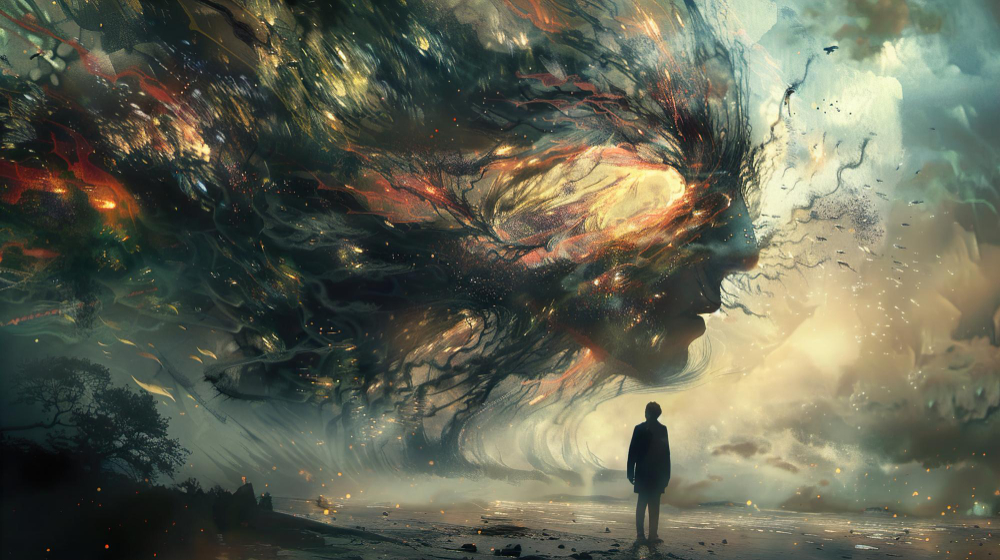
But the dark night is not a problem to be solved. It is a passage to be moved through.
The most helpful orientation is one of surrender — not passive resignation, but an active, conscious willingness to stop fighting the process. To stop trying to hold together what is falling apart. To allow, as much as humanly possible, the dissolution to do its work.
This doesn’t mean doing nothing. It means being very careful and discerning about what you engage with. Gentle practices that support rather than distract are helpful — quiet time in nature, simple body-based practices, honest and nourishing conversation, journalling without agenda. Things that resource you without allowing you to bypass what is happening.
It means tending to the basics with unusual care. Sleep. Food. Water. Movement. The body knows things the mind is too busy to notice, and the body needs tending in times like these.
It means resisting the urge to fill the silence. The emptiness of the dark night is uncomfortable, but it is also generative. It is in that silence — in the space where the old certainties used to live — that something new begins to form.
And it means, above all, being extraordinarily compassionate with yourself. You are not weak. You are not broken. You are in the middle of one of the most demanding and meaningful processes a human being can undergo. You deserve patience, tenderness, and deep respect — from others, yes, but most importantly from yourself.
Does the Dark Night End?
Yes. It does.
Not always quickly. Not always cleanly. And not always in the way you might expect. You do not come through the dark night and find yourself returned to who you were before — that is not the point of it. You come through changed. Quieter, often. More honest. More at home in mystery. Less armoured. Less easily shaken by the small things that once loomed large.
What emerges on the other side is not a fixed, finished version of you. It is a more authentic, more spacious, more alive version — one that has been stripped of much that was false and left with something more real.
People who have lived through the dark night often describe a quality of peace that is unlike anything they experienced before it. Not the peace of everything being resolved, but the peace of being able to be present to life as it actually is — uncertain, impermanent, mysterious, and achingly beautiful.
St. John of the Cross described it as union. Thomas Moore called it soul-making. Eckhart Tolle writes of it as a dissolution of the ego self. Whatever language speaks to you, the truth beneath it is the same: the dark night is not the end. It is a beginning dressed in the most uncomfortable clothing imaginable.
A Final Word
If you are in the dark night right now, I want to say something to you directly: you are not lost. I know it may feel that way. I know the silence can feel like abandonment, and the emptiness can feel like it will never fill. But you are in the middle of something deeply real and deeply important.
The dark night does not come to destroy you. It comes to free you.
Keep going. Be gentle. Ask for help. Trust — even when trust feels impossible — that the darkness has a purpose, and that on the other side of it, you will find a life and a self that feels more truly yours than anything you have known before.
You are not alone in this. Countless souls before you have walked this same road, in the dark, without a map, and found their way through. So will you.
We may earn a commission for purchases made using our links. Please see our disclosure to learn more.