
Mudras: Unlocking Your Inner Potential through Sacred Hand Gestures
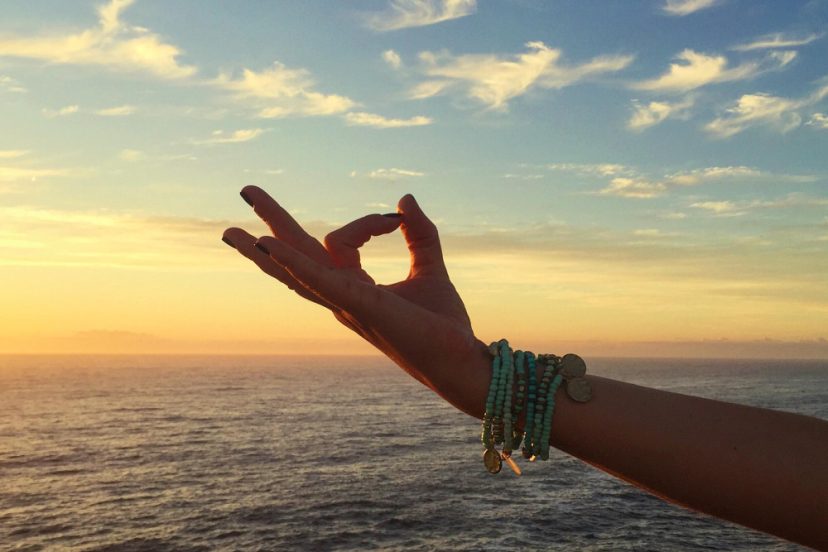
Have you ever noticed how a simple hand gesture can change the way you feel? Perhaps you’ve pressed your palms together in prayer or caught yourself naturally touching your thumb to your index finger while deep in thought. These aren’t just random movements—they’re mudras, and they hold the key to unlocking profound shifts in your spiritual and emotional well-being.
Often lovingly called the “yoga of the hands,” mudras are so much more than symbolic gestures. They’re ancient tools that have been guiding spiritual seekers for thousands of years, gently directing the flow of energy through your body, sharpening your focus, and opening doorways to deeper states of consciousness. Whether you’re just beginning your spiritual journey or you’ve been walking this path for years, understanding and practicing mudras can bring remarkable transformation to your daily life.
Let me share with you the beautiful world of mudras—their origins, their meanings, and most importantly, how they can support you in your own unique spiritual unfolding.
Where Mudras Come From: A Journey Through Time
When we talk about mudras, we’re connecting with wisdom that stretches back thousands of years. These sacred hand gestures have their roots deeply planted in the spiritual soil of ancient civilizations, particularly in India, where they’ve been cherished and passed down through generations.
Ancient Wisdom Written in Sacred Texts
The earliest mentions of mudras appear in the Vedas—the most ancient sacred texts of Hinduism, written over 3,000 years ago. Can you imagine? These practices have been helping people just like you find peace and connection for millennia. Over time, mudras became woven into the fabric of Hindu rituals, temple dances, and spiritual ceremonies. They weren’t just movements; they were prayers made visible, intentions given form.
In Buddhism, you’ll find mudras beautifully depicted in statues and paintings of the Buddha. Each gesture tells a story, represents a teaching, or embodies a particular state of enlightened awareness. Walk through any Buddhist temple, and you’ll see these hand positions speaking their silent language of wisdom and compassion.
The beautiful thing about mudras is how they’ve transcended cultural and religious boundaries. While they originated in Eastern spiritual traditions, their power to heal, center, and transform has made them valuable tools in meditation and yoga practices around the world.
The Language of Mudras: Speaking Without Words
What makes mudras so special is their symbolic nature. They’re not just about putting your fingers in certain positions—each mudra carries meaning, intention, and energetic significance. Think of them as a spiritual language your body speaks naturally once you learn the vocabulary.
Consider the Anjali Mudra, the gesture of pressing your palms together at your heart. You’ve probably done this countless times, perhaps in yoga class or in a moment of gratitude. This simple gesture speaks volumes about reverence, respect, and unity. Or the Abhaya Mudra, with the palm facing outward—it’s like saying “I offer you protection and peace” without uttering a single word.
When you practice mudras with awareness and intention, you’re tapping into a communication system that bypasses words and speaks directly to the energetic and spiritual dimensions of your being.
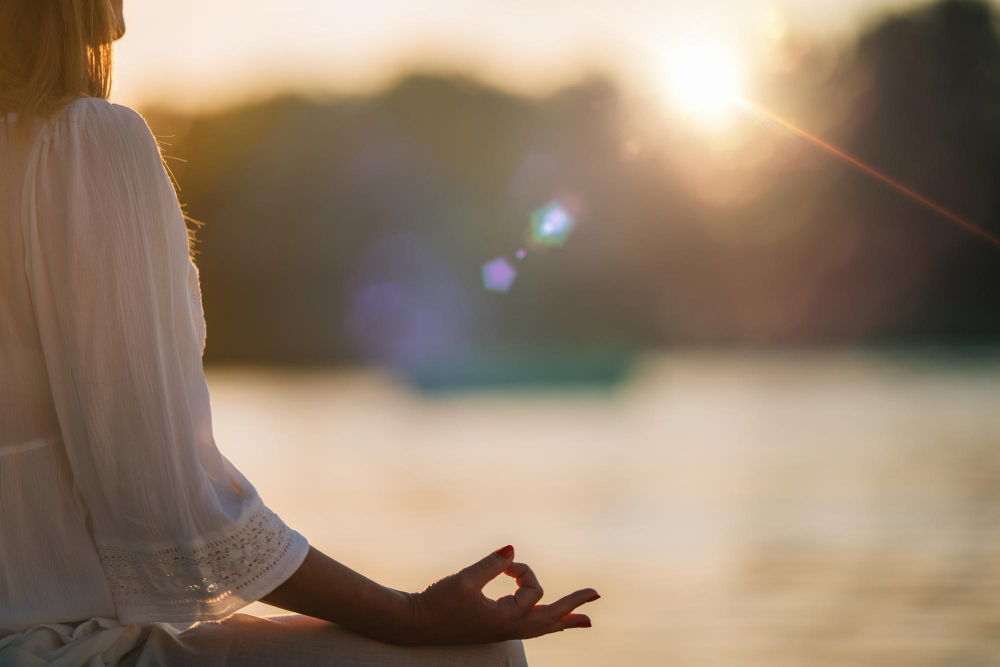
Understanding the Science: How Mudras Actually Work
Now, I know some of you might be thinking, “This sounds lovely, but how does it actually work?” It’s a fair question, and there’s actually fascinating science behind these ancient practices.
Your Hands: Energy Highways to Transformation
According to yogic philosophy, your body is crisscrossed with energy channels called nadis. Think of them as rivers carrying life force—or prana—throughout your entire system. When these energy channels flow freely, you feel vibrant, clear, and balanced. When they’re blocked, you might feel sluggish, foggy, or emotionally off-center.
Here’s where it gets interesting: each of your fingers is believed to represent one of the five fundamental elements that make up our world and our bodies. Your thumb represents fire, your index finger is air, your middle finger embodies space, your ring finger is earth, and your little finger is water. When you practice mudras, you’re essentially conducting these elements, directing their energies to create balance and harmony within yourself.
The Gyan Mudra is a perfect example. When you gently touch your thumb and index finger together, you’re symbolically uniting the elements of fire and air. This combination is traditionally associated with enhancing wisdom, knowledge, and mental clarity. It’s not magic—it’s about working with the subtle energies that are always present in your body.
Your Brain on Mudras: The Modern Science Connection
Modern neuroscience is beginning to catch up with what yogis have known for centuries. Your fingertips are incredibly sensitive—packed with nerve endings that connect directly to different regions of your brain. When you hold a mudra, you’re applying gentle pressure to these nerve points, which can stimulate specific areas of brain activity.
Research suggests that this stimulation can improve focus, induce states of relaxation, and even influence emotional states. It’s similar to acupressure or reflexology, but even more accessible because you can practice anytime, anywhere, using just your own hands.
The beauty is that you don’t need to understand all the science for mudras to work. Just like you don’t need to understand electricity to turn on a light, you don’t need to grasp every detail of energy flow to benefit from mudras. Trust the practice, and let your own experience be your guide.
Meeting the Mudras: Your Spiritual Companions
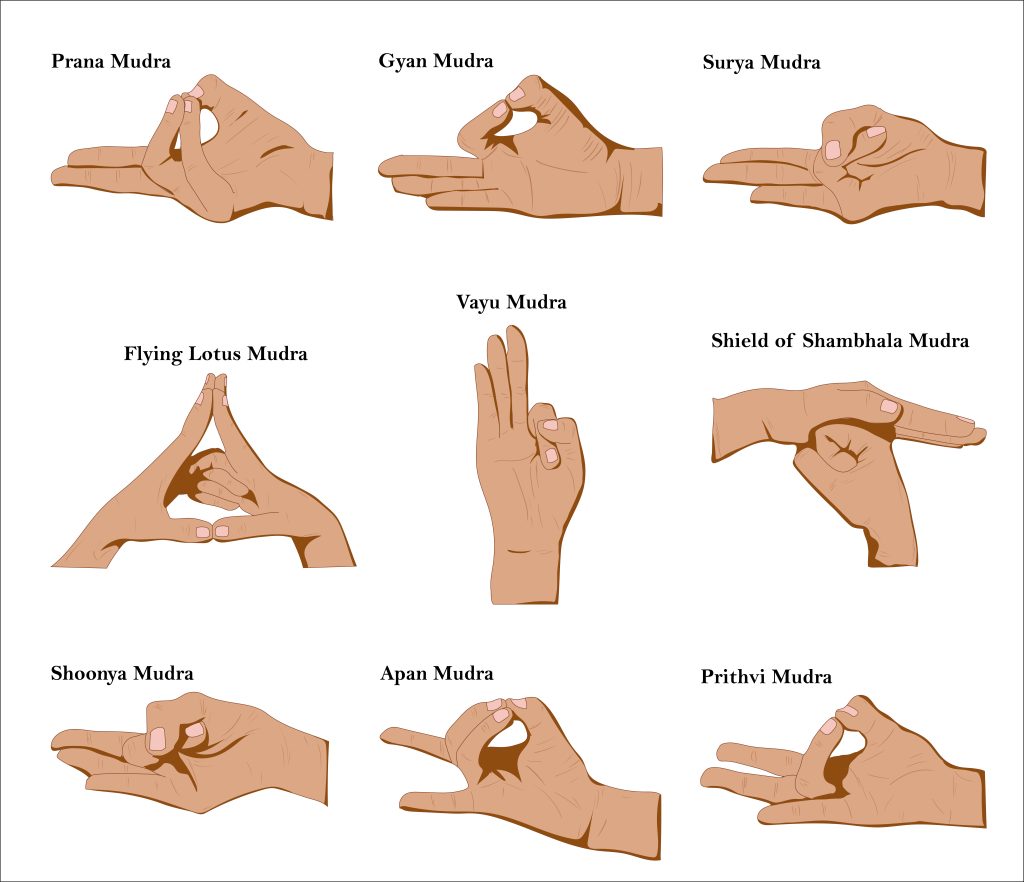
There are literally hundreds of mudras in the ancient texts, each with its own personality and purpose. Let me introduce you to some of the most beloved and accessible mudras—the ones you can start working with today.
Gyan Mudra: Your Gateway to Inner Wisdom
If mudras were a family, Gyan Mudra would be the wise elder everyone turns to for guidance. This is probably the most recognized mudra you’ll see, especially in meditation practices. To form it, simply touch the tip of your index finger to the tip of your thumb, letting your other three fingers extend gently.
Gyan Mudra is your ally when you need mental clarity, enhanced concentration, or deeper access to your inner wisdom. Students love it during study sessions, and meditators use it to quiet mental chatter and access those deeper levels of awareness. The element of air that this mudra balances is associated with movement, breath, and—quite fittingly—the movement of thoughts and ideas.
Try holding Gyan Mudra the next time you’re facing a difficult decision or need creative inspiration. You might be surprised at how it helps settle your mind and bring clarity to confusion.
Anjali Mudra: The Universal Gesture of Heart Connection
You know this one, even if you’ve never called it by name. Anjali Mudra is when you press your palms together at your heart center—the gesture you see at the beginning and end of yoga classes, in prayer, or in the traditional Indian greeting “Namaste.”
This mudra is pure heart. It embodies gratitude, respect, devotion, and the recognition of the divine spark in yourself and others. When you hold Anjali Mudra, you’re creating a complete circuit of energy, connecting your left and right sides, your masculine and feminine aspects, your earthly and spiritual natures.
Use Anjali Mudra whenever you need to come back to your center, to remember what’s truly important, or to send love and appreciation—to yourself, to others, or to the universe itself. It’s a beautiful way to bookend your day, starting and ending with gratitude.
Prana Mudra: Awakening Your Life Force
Feeling depleted? Prana Mudra is your energetic pick-me-up. To practice it, bring together the tips of your thumb, ring finger, and little finger, while your index and middle fingers extend comfortably.
This mudra specifically works with prana—your vital life force energy. It’s like giving yourself an internal energy drink, but one that actually nourishes rather than depletes you. People who practice Prana Mudra regularly report increased stamina, better immune function, and an overall sense of vitality and aliveness.
I love recommending this mudra for those afternoon slumps when coffee just isn’t cutting it, or for anyone recovering from illness or exhaustion. Hold it for 5-10 minutes, breathe deeply, and feel your energy reserves beginning to replenish.
Dhyana Mudra: The Meditation Master
Dhyana Mudra has a beautiful simplicity to it. Rest your right hand on top of your left hand, both palms facing upward, with your thumbs gently touching to form a soft triangle. This is the classic meditation gesture you’ll see in countless images of the Buddha.
This mudra creates a container for your meditation practice. It symbolizes the union of wisdom and compassion, and it helps cultivate that deep, stable concentration that makes meditation truly transformative. When you hold Dhyana Mudra, you’re signaling to your entire being that it’s time to go inward, to become still, to listen to the whispers of your soul.
If you’ve struggled with meditation or find your mind constantly wandering, give this mudra a try. The physical act of holding the gesture can serve as an anchor, gently bringing you back whenever you drift away.
Apana Mudra: Your Grounding and Cleansing Companion
Apana Mudra involves touching the tips of your thumb, middle finger, and ring finger together. This mudra works with the downward flow of energy in your body—the energy of elimination, grounding, and release.
Think of Apana Mudra as your spiritual and physical housekeeper. It helps with digestion, supports the body’s natural detoxification processes, and strengthens your connection to the earth element. When you’re feeling scattered, ungrounded, or when you need to let go of what no longer serves you—whether that’s physical toxins, emotional baggage, or mental patterns—this is your mudra.
Practice Apana Mudra when you’re feeling anxious or “up in your head.” It will help draw your energy downward, into your roots, helping you feel stable, secure, and connected to the solid ground beneath you.
Bringing Mudras into Your Daily Life: Practical Magic
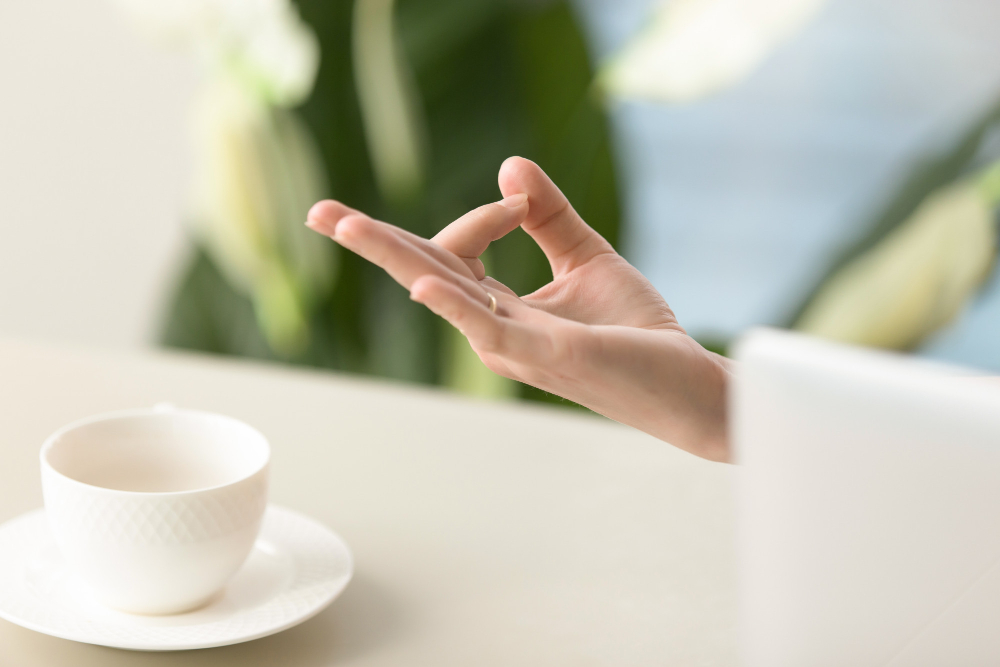
The true power of mudras emerges when you weave them into the fabric of your everyday life. They’re not meant to be special practices reserved for formal meditation sessions—though they certainly enhance those too. Mudras are meant to be accessible, portable tools you can use anytime, anywhere.
Mudras and Your Meditation Practice
The most natural home for mudras is within your meditation practice. Before you begin your meditation, take a moment to consider your intention. What do you hope to cultivate in this practice? Clarity? Peace? Energy? Wisdom? Then choose a mudra that aligns with that intention.
Hold the mudra gently throughout your meditation. Don’t grip or strain—mudras should feel effortless, like your hands naturally know where to be. Let the gesture support your practice, serving as both an anchor and a channel for the energies you’re working with.
Enhancing Your Yoga Practice with Mudras
If you practice yoga, mudras can add another dimension to your asana practice. Many yoga poses pair naturally with specific mudras. In seated poses, you might use Gyan Mudra or Dhyana Mudra. During more vigorous practices, simpler mudras like Anjali Mudra can help you maintain your inner focus even while your body is active.
Experiment with different mudras during your practice. Notice how they change your experience of familiar poses. You might find that a mudra you’ve never tried before completely transforms a posture you’ve done hundreds of times.
Mudras as Daily Rituals and Anchors
One of my favorite ways to work with mudras is to use them as anchors throughout the day. Start your morning with Prana Mudra as you set your intentions, giving yourself an energetic boost for the day ahead. When you’re at your desk and need to focus on complex work, shift into Gyan Mudra for a few minutes. Feel stressed or anxious? Take a moment with Anjali Mudra at your heart, reconnecting with your center.
Before bed, spend a few minutes with Apana Mudra, consciously releasing the day’s tensions and grounding yourself in preparation for restful sleep. These small moments of mudra practice can become powerful anchors of mindfulness throughout your day.
Mudras for Healing and Self-Care
Many people find mudras incredibly helpful as part of their healing and self-care routines. If you’re dealing with stress, anxiety, or emotional turbulence, specific mudras can help restore balance. Physical ailments can also be supported—though mudras should complement, not replace, proper medical care.
The key is consistency and patience. Unlike taking a pill, the effects of mudras are often subtle and cumulative. But over time, many people find them to be powerful allies in their healing journey.
The Transformative Journey: How Mudras Change You
When you commit to a regular mudra practice, something beautiful begins to unfold. These simple hand gestures become gateways to profound inner transformation. Let me share what this journey might look like for you.
Awakening Your Intuition and Inner Guidance
One of the most remarkable gifts of mudra practice is how it sharpens your intuition. As you balance the elements within your body and align your energy through these gestures, you’re essentially clearing the static from your internal communication channels. Your inner wisdom—that quiet voice that always knows what’s right for you—becomes clearer and more accessible.
You might start noticing that decisions come more easily, that you “just know” which direction to take, or that you’re picking up on subtle energies and information you previously missed. This isn’t about becoming psychic—it’s about clearing away the noise so you can hear what you’ve always known.
Cultivating Present-Moment Awareness
In our distracted, multitasking world, the simple act of holding a mudra becomes a powerful practice of presence. Each time you form the gesture, you’re creating a physical reminder to come back to the here and now. Over time, this practice naturally extends beyond the moments when you’re actively holding mudras.
You might find yourself becoming more mindful in daily activities—really tasting your food, fully listening in conversations, noticing the beauty around you. This present-moment awareness is the foundation of peace and contentment, regardless of external circumstances.
Finding Emotional Balance and Mental Clarity
The energy balancing effects of mudras ripple outward into your emotional and mental states. When the elements within you are in harmony, emotional ups and downs become less extreme. Mental fog lifts. That anxious chatter in your mind quiets down. You develop a kind of inner stability that helps you navigate life’s challenges with more grace and resilience.
This doesn’t mean you’ll never feel difficult emotions or face mental struggles. It means you’ll have more resources to work with, more capacity to meet those challenges without being overwhelmed by them.
Deepening Your Spiritual Connection
Perhaps the most profound effect of mudra practice is how it deepens your connection to the spiritual dimension of life. These gestures act as bridges between the physical and the subtle, the mundane and the sacred. They help you access states of consciousness that might otherwise feel distant or impossible to reach.
Over time, many practitioners report experiences of profound peace, moments of clarity about their life’s purpose, feelings of connection to something greater than themselves, and even glimpses of what spiritual traditions call enlightenment. These aren’t guaranteed outcomes, but they’re beautiful possibilities that mudra practice can help open.
Embracing Your Mudra Journey: Moving Forward with Heart
As we come to the close of our exploration, I want to leave you with some encouragement and practical guidance for your own mudra journey.
Remember, there’s no “perfect” way to practice mudras. The most important thing is that you approach them with sincerity, curiosity, and patience. Start with one or two mudras that resonate with you. Practice them daily, even if just for five or ten minutes. Notice what you notice, without judgment or expectation.
Some days, the effects might be dramatic. Other days, they might be so subtle you wonder if anything’s happening at all. Trust the process. These ancient practices have endured for thousands of years precisely because they work—not in flashy, dramatic ways necessarily, but in the quiet, steady transformation of consciousness that happens when we show up consistently with open hearts.
Your hands are always with you, which means you always have access to these powerful tools for transformation. Whether you’re sitting in meditation, standing in line at the grocery store, or lying in bed at night, mudras are available to support you, guide you, and help you remember your innate wholeness.
As you continue exploring mudras, let them be companions on your journey rather than tasks to accomplish. Let them speak to you in their own language of energy and intention. And most importantly, let them help you remember what you’ve always been: a spiritual being having a human experience, with infinite potential for growth, wisdom, and love.
The journey of a thousand miles begins with a single step—or in this case, a single gesture. Your hands are ready. Your heart knows the way. The ancient wisdom of mudras is here to guide you. All that’s left is to begin.
We may earn a commission for purchases made using our links. Please see our disclosure to learn more.